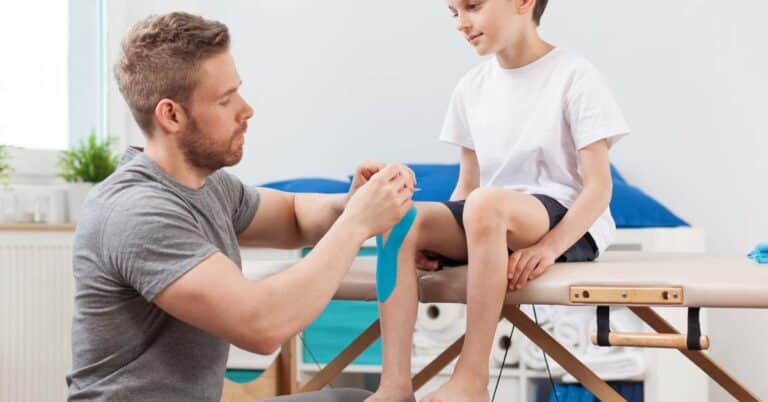
Recently, our very own Adrianne Vangool joined Global News to discuss the vital role of pediatric physical therapy. From helping infants reach their developmental milestones to supporting coordination in older children, Adrianne shares how simple, play-based strategies can make a big difference for your child’s growth. You can listen to the full interview in the audio player above, and read the edited transcript below.
[Interviewer]
Good morning. We’re back here at Vangool Wellness talking with Adrianne Vangool. Getting prepared for the summer, you know, kids moving, physical activity. What comes with that though is physical therapy and knowing how to reach those milestones and move around. What are some things you want parents to know as we kind of get into the summer?
[Adrianne Vangool]
Yeah, I think a lot of times we think about kids’ physio or pediatric physiotherapy as something that maybe they see if something’s really wrong or an injury, but there’s a lot that we do to help parents know: is this normal? Are they reaching their—are they crawling at the correct time in that zone? What we call meeting their developmental milestones. And so what we’re trying to do is work with, you know, infants all the way to kids that are 15 or 16 years old. And there’s some specific things to look for in terms of the range of time of when you might refer if you think they’re slower to crawl or move. But when in doubt, I always say parents know best. When in doubt, reach out.
[Interviewer]
What are some reasons why an older kid might be going to physical therapy?
[Adrianne Vangool]
Yeah. So, if you find that their coordination maybe is not similar to their peers or you’re just noticing they’re moving a little different or they’re not keeping up, that might be something. But earlier on, you might notice things in an infant, for example, something we see a lot is changes to the head shape of a baby. And so, with the back-to-sleep program where we’re going from laying on the back for their safety to sitting in the bucket to going on the swing, there’s a lot of pressure on the back of the head. And baby’s heads aren’t fully formed yet, so they’re malleable. So when we see them, if you notice that the head shape isn’t circular—and we’ll show some images here—what we do is we have… it looks a little scary, but I swear it doesn’t hurt. It just helps us to measure and tell if the baby’s head shape is the way it should be. And then there’s things we can do through play therapy. So it’s not homework for you and the baby; it’s through play. You’ll see the different toys we have here. Our sessions are fun, but we also can work with the parents and the guardians on how to create play to support the head shape and also to help baby and the children reach their milestones.
[Interviewer]
I know a big part of that would be incorporating tummy time, making sure we’re moving positions and angles, but I also know if it’s the first baby, maybe a little bit of anxiety. Could you show us maybe some tips and tricks for moving around your baby?
[Adrianne Vangool]
Absolutely. So when a baby’s more comfortable laying on their back, they’ll cry when they’re on their stomach and it’s painful for the parents too. So one thing we encourage, if let’s say we’ll call this little Sally here—Sally’s got too much hair for this age, but—if she’s really not liking tummy time, we can do tummy time being held more on the parent or the caregiver. But also, if you’re noticing that they’re maybe struggling to roll or they’re a little behind on that, we work with the parents to show how we can help baby learn that movement mechanic. And so there’s things with baby handling, as well as how to support them through handling in crawling and getting that movement pattern. And if kids maybe had a difficult birth or they spent time in the NICU, unfortunately, sometimes they just need a little assistance in reaching those early milestones. But I want to assure parents that just because they’re maybe delayed in certain movement patterns, it doesn’t mean they can’t catch up, but maybe they just need a little bit of help. And then we can support parents in doing that.
[Interviewer]
I know you had mentioned making it feel more like play and not necessarily homework. What are some things we could introduce at home today that could maybe help a parent?
[Adrianne Vangool]
Yes. So, for example, if maybe your child’s a little slower in getting to the sit-to-stand phase, what you can do in something even just like this, is you have a little surface. You find their favorite toy and you put it up here. And when you’re playing with them, then you’re encouraging them, “Yeah, reach, reach.” And you’re having maybe a little less hand support. And then they’re going from the position of in this here, learning how to stand and grab. But it’s all fun. It’s all play. And that positive interaction really just makes it more enjoyable for them, more enjoyable for the parent. But that little bit of direction is really often all that the caregivers and the child needs.
[Interviewer]
So really just tiny changes that you’re making in play, changing the development completely and meeting those milestones. If someone was maybe interested in getting in contact or participating in physical therapy for their children, what should they know? Where should they reach out?
[Adrianne Vangool]
Yeah, with physiotherapy, you don’t need a doctor’s referral. It’s direct referral. So, we say: when in doubt, reach out. And then as well, we also work with individuals that have neurodiversity, whether it’s autism or ADHD, and then we can work on strategies to help them regulate and the parents work with them as well.
[Interviewer]
Wonderful. So, if you’re interested in maybe asking some questions, getting involved, reaching out to Vangool Wellness to see what they can do best to help your child. Thank you for joining me.
[Adrianne Vangool]
Thank you.