
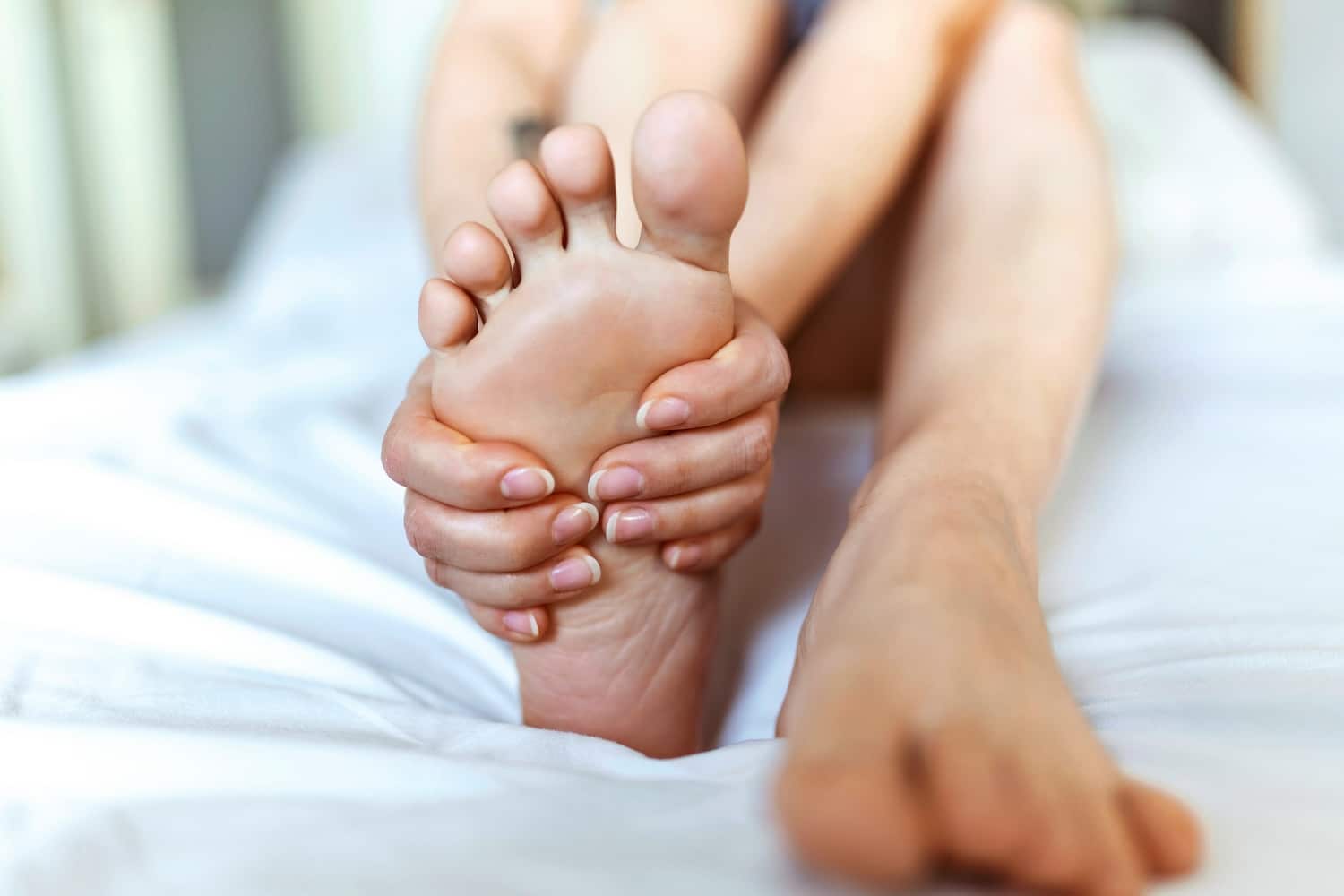
Burning pain in the ball of your foot when you walk. Sharp, stabbing sensations that make you want to take your shoes off immediately. A feeling like you are walking on pebbles or a bunched-up sock, even though nothing is there. These complaints often point to metatarsalgia, a condition where the metatarsal heads in your forefoot become overloaded and irritated.
Metatarsalgia is not a single injury but rather a symptom of forefoot loading issues. Understanding the hidden patterns that create this pain helps identify the root cause and guides effective treatment.
At Vangool Physiotherapy in Saskatoon, we assess the biomechanical factors contributing to ball-of-foot pain and create targeted treatment plans that address the underlying dysfunction rather than just masking symptoms.
Let’s explore the eight hidden patterns that commonly lead to metatarsalgia.
What Is Metatarsalgia?
Metatarsalgia refers to pain and inflammation in the ball of the foot, specifically around the metatarsal heads. These are the rounded ends of the long bones in your forefoot, just behind your toes.
When you walk or run, these bones are meant to share the load relatively evenly. However, various biomechanical issues can cause disproportionate pressure on one or more metatarsal heads, leading to pain, inflammation, and sometimes even stress reactions in the bone.
The pain typically feels like burning, aching, or sharp stabbing sensations. It often worsens with walking, running, or standing for extended periods and improves with rest.
Pattern 1: High-Heeled Footwear and Forefoot Overload
One of the most common patterns involves footwear that shifts body weight forward onto the metatarsal heads. High heels, narrow toe boxes, and shoes with inadequate cushioning all increase forefoot loading.
When your heel is elevated, your center of gravity moves forward, placing excessive pressure on the ball of your foot. Over time, this constant overload irritates the metatarsal heads and surrounding soft tissues.
Even moderate heel heights worn consistently throughout the day can create enough cumulative stress to trigger metatarsalgia symptoms.
Pattern 2: Weak Intrinsic Foot Muscles
Your feet contain small muscles that help control arch position and distribute pressure across the forefoot. When these intrinsic foot muscles become weak, the metatarsal heads lose their natural cushioning and support.
Weakness often develops from wearing supportive footwear constantly, which prevents these muscles from working. Prolonged periods of inactivity or sedentary behavior also contribute to muscle atrophy.
Without adequate intrinsic muscle function, the metatarsal bones take on stress that should be distributed across multiple structures.
Pattern 3: Loss of the Transverse Arch
Your foot has three arches: the medial longitudinal arch (the one most people think of), the lateral longitudinal arch, and the transverse arch that runs across the ball of the foot.
The transverse arch helps distribute weight across all five metatarsal heads. When this arch collapses, often due to ligament laxity or muscle weakness, the central metatarsals (typically the second and third) bear disproportionate load.
This pattern is particularly common in people who have flexible, flat feet or who spend long hours standing on hard surfaces.
Pattern 4: Morton’s Toe and Structural Length Discrepancies
Morton’s toe describes a foot structure where the second toe is longer than the first. This seemingly minor variation changes the biomechanics of push-off during walking and running.
When your second toe is longer, the second metatarsal head experiences greater force with each step. Over time, this repetitive overload creates inflammation and pain specifically under that bone.
Other structural length discrepancies between metatarsals can create similar problems, with the longer bones taking excessive force.
Pattern 5: Tight Calf Muscles and Limited Ankle Mobility
Restricted ankle dorsiflexion, often caused by tight calf muscles, forces the foot to compensate during the stance phase of gait. When your ankle cannot bend adequately, your foot must pronate excessively or shift weight forward earlier than normal.
Both compensations increase pressure on the metatarsal heads. This pattern is particularly common in people who wear heels frequently, athletes with poor flexibility, or individuals recovering from ankle injuries.
The tightness in the posterior chain of the leg essentially traps excessive force in the forefoot.
Pattern 6: Excessive Pronation and Dynamic Collapse
Pronation is a normal, necessary motion of the foot. However, excessive or prolonged pronation during gait can create abnormal loading patterns in the forefoot.
When the arch collapses too much or too quickly during weight-bearing, it changes the angle at which force travels through the metatarsals. This often shifts excessive load onto the second and third metatarsal heads.
People with flexible flat feet or poor hip and core stability often demonstrate this pattern.
Pattern 7: High-Impact Activities Without Adequate Conditioning
Running, jumping, and other high-impact activities dramatically increase the forces going through your forefoot. When you increase training volume or intensity too quickly, your tissues do not have time to adapt.
This pattern is common in runners who increase mileage rapidly, athletes returning from time off, or people who transition to minimalist footwear without proper progression.
The metatarsals develop stress reactions or inflammation because the load exceeds their current capacity.
Pattern 8: Age-Related Fat Pad Atrophy
The ball of your foot has a natural fat pad that cushions the metatarsal heads during weight-bearing. With age, this fat pad can thin and migrate, reducing its protective effect.
This pattern typically affects people over 50 and creates symptoms that worsen gradually over time. The loss of natural cushioning means the metatarsal bones experience more direct pressure with each step.
Certain systemic conditions including diabetes and rheumatoid arthritis can accelerate fat pad atrophy.
How Physiotherapy Addresses Metatarsalgia
Treatment at Vangool Physiotherapy in Saskatoon focuses on identifying which patterns are contributing to your forefoot pain and addressing them systematically.
Assessment includes analyzing your gait mechanics, testing ankle and foot mobility, evaluating intrinsic foot muscle strength, examining footwear, and identifying structural factors that may be contributing.
Treatment typically combines footwear modifications or orthotic recommendations to redistribute pressure, calf and foot stretching to improve mobility, intrinsic foot strengthening exercises, gait retraining to reduce forefoot loading, and manual therapy to address tissue restrictions.
When to Seek Professional Assessment
You should consider professional evaluation if you experience persistent burning or sharp pain in the ball of your foot, pain that worsens with walking or standing, difficulty wearing certain types of shoes, or symptoms that do not improve with rest and over-the-counter insoles.
Early intervention prevents progression to more serious conditions including stress fractures, chronic inflammation, or permanent changes in gait mechanics.
Moving Forward Without Foot Pain
Ball-of-foot pain is not something you have to accept as normal or inevitable. Understanding the hidden patterns creating your metatarsalgia symptoms allows for targeted treatment that addresses the root cause.
At Vangool Physiotherapy in Saskatoon, we provide comprehensive assessment and treatment for forefoot pain and metatarsalgia. Our approach identifies your specific biomechanical patterns and creates individualized solutions that get you back to comfortable movement.
If burning, sharp, or aching forefoot pain is limiting your activities, book an assessment today and start your path toward lasting relief.


